Management of the power grid with a large share of production from renewable energy sources RES_CTRL

Institutional research project

Area

STEM

Duration

48 months

Total funds

182,000.00 EUR

Abstract

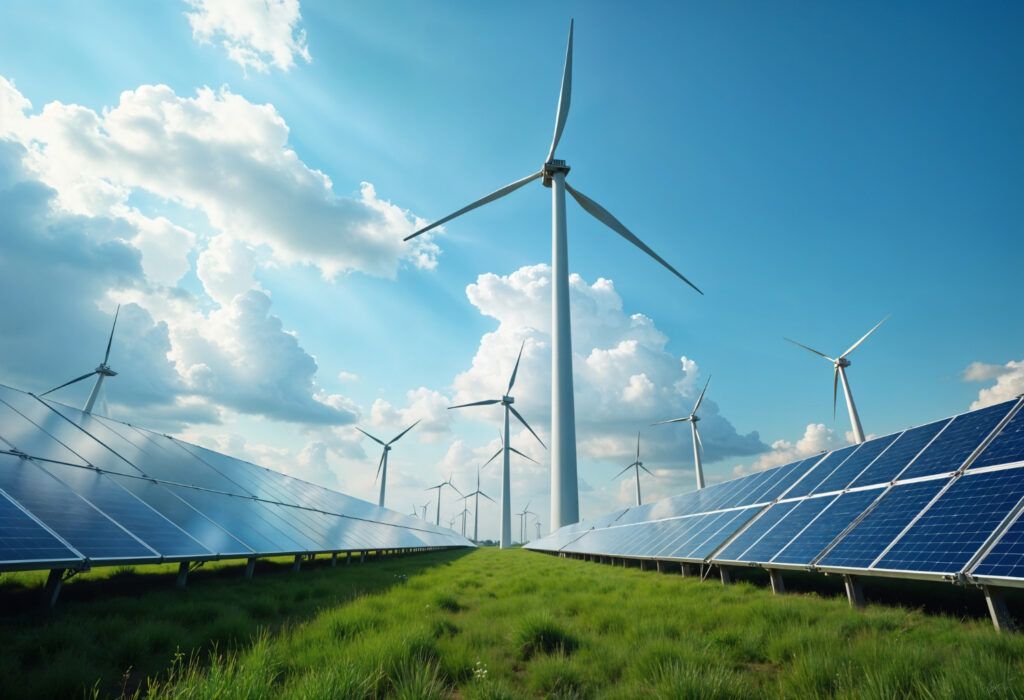
The sudden increase in the integration of RES power plants into the power grid presents challenges related to aspects such as flexibility, power quality, microgrid management, and power system stability.

In this project, optimization models will be developed that will be able to determine the optimal management of energy community systems for the provision of flexibility services with the aim of maximizing profit in market conditions. Also, a model will be developed that will enable the system operator to optimally manage the operation of the power grid using a system for providing flexibility services.

In order to improve the quality of electricity, an optimization model will be developed to reduce harmonic distortion in the power grid with a large share of production from renewable energy sources.

An algorithm will be developed for optimal management of different types of microgrids, or customers (consumers) with their own production from various renewable energy source technologies and storage in battery systems and electric vehicles with optimization of the energy exchange of these microgrids with the power grid.

The project considers methods for improving the stability of the EES dominated by an increased share of stochastic production from RES dependent on meteorological conditions with a small inertial contribution, aspects of leading to margins of delivered power, the use of modern automatic voltage regulators (AVRs) and the occurrence of electromechanical oscillations of active power that can lead to disconnection of key components important for sustainable operation.


Main objectives

1

Improve the flexibility, quality and stability of power grids with a high share of renewable energy sources through the development, validation and experimental application of advanced optimization models, algorithms and digital solutions for microgrid and power system management

2

Increase scientific excellence and international recognition through publication of results in WoS/SCOPUS journals and active involvement of young researchers in all phases of the project.

3

Establish a modern experimental and digital infrastructure for research, development and testing of innovative solutions in the field of renewable energy sources, microgrids and electric power communities, while encouraging cooperation with the economy and applying the principles of sustainability.

Project description

Given the previous scientific research experience of the members of this research team, the improvement of the management of the electricity grid (EEM) with a high share of production from RES can be focused in four main directions. The four research directions, which are intertwined and complementary, in this project are four work packages:

  • WP1 Analysis, modeling and experimental validation of a system for providing flexibility services in the electricity grid with a high share of power plants from renewable energy sources;
  • WP2 Analysis and improvement of electricity quality in the electricity grid with a high share of production from renewable energy sources;
  • WP3 Development, modeling and testing of models for optimal management of different types of energy systems of active customers in a microgrid;
  • WP4 Development and validation of methods for damping electromechanical oscillations in the EES with renewable energy sources;

Research team

prof. dr. sc. Damir Šljivac

Project team member

prof. dr. sc. Predrag Marić

Project team member

prof. dr. sc. Hrvoje Glavaš

Project team member

prof. dr. sc. Danijel Topić

Project team member

dr. sc. Matej Žnidarec

Project team member

dr. sc. Mario Primorac

Project team member

dr. sc. Ružica Kljajić

Project team member

Funded by the European Union - Next Generation EU. However, the views and opinions expressed are solely those of the author(s) and do not necessarily reflect those of the European Union or the European Commission. Neither the European Union nor the European Commission can be held responsible for them.